The World Does Not Need Another Copy. It Needs You.
Become who you are by learning who you are. - Mastery
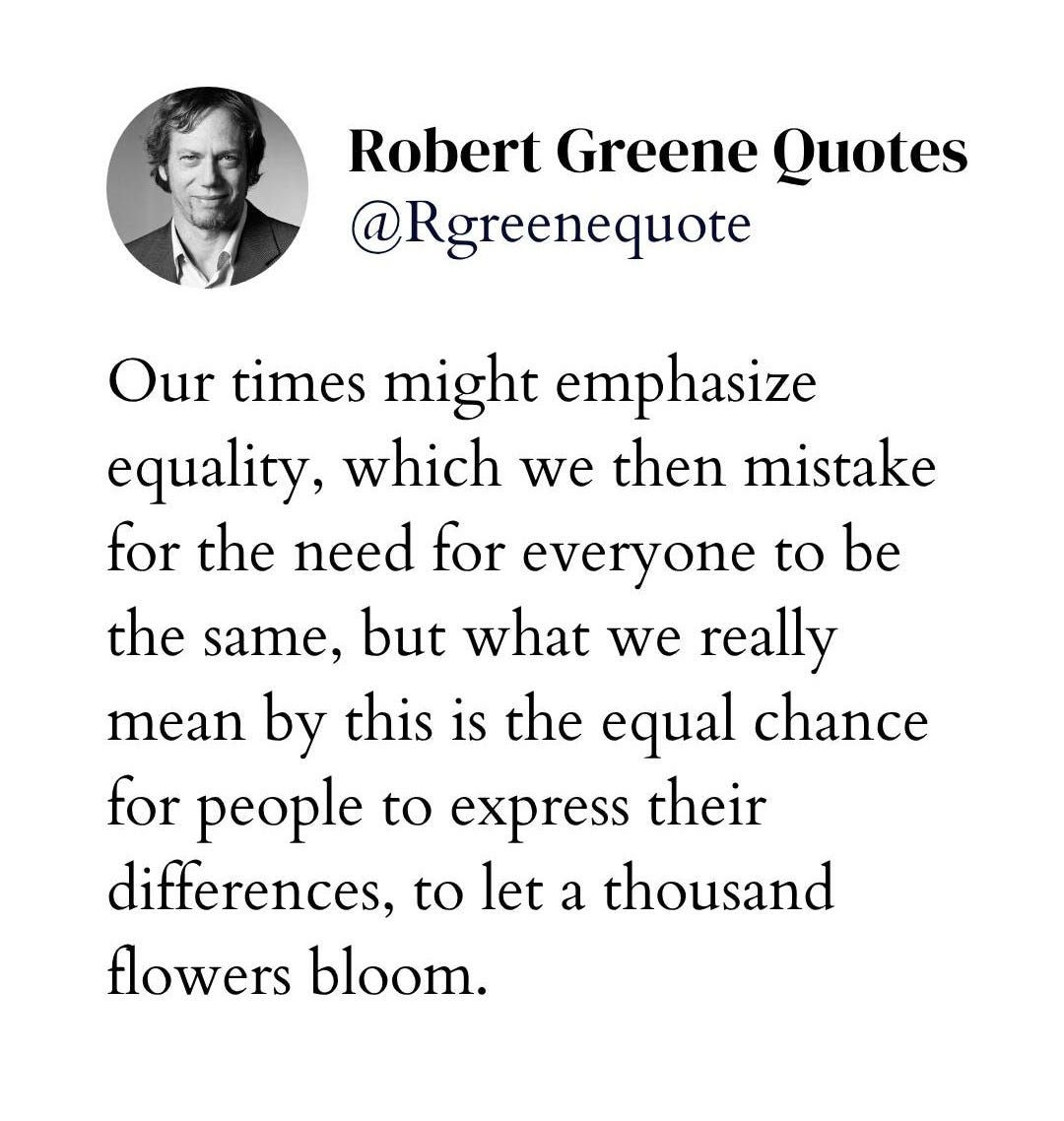
Become who you are by learning who you are.
Some people never become who they are; they stop trusting in themselves; they conform to the tastes of others, and they end up wearing a mask that hides their true nature. If you allow yourself to learn who you really are by paying attention to that voice and force within you, then you can become what you were fated to become—an individual, a Master.
There is a force that operates quietly but with devastating consistency across human life. The force of conformity, the pressure to become what the world around you needs rather than what you were born to be, to fold yourself into shapes that fit the available spaces rather than insist on the shape that is uniquely and irreducibly yours.
Most people are looking for career advice and not a philosophy of existence — that every human being arrives in the world with a particular set of inclinations, fascinations, and energies that are not chosen and not constructed but are something deeper, something closer to a fingerprint, and that the work of a life well lived is not the acquisition of skills or credentials or status but the gradual uncovering of that original nature and the courage to follow it into the world regardless of what the world has decided it needs from you.
We have taken the political idea of equality, which means the equal right of every person to pursue their own path, and corrupted it into something almost opposite, the social pressure for everyone to want the same things, value the same things, measure success by the same metrics, and arrive at the same destinations by the same approved routes, so that a generation of people with genuinely unusual gifts and genuinely unusual callings find themselves suppressing those gifts and those callings in order to fit inside a system that was never built for them and will never fully use them.
The person who discovers what they are genuinely built for and pursues it with everything they have will always outperform the person who pursues what they were told to pursue, not because passion is virtuous but because the depth of engagement that comes from working in alignment with your nature produces a quality of focus and resilience and creativity that cannot be manufactured through discipline alone, and that depth is precisely what separates the master from the merely competent.
Vera Wang

Most people know her as the world’s most celebrated bridal designer, the woman whose name became synonymous with wedding gowns, whose dresses appeared on Michelle Obama, Mariah Carey, and nearly every figure skater at the Olympics for three decades. What most people don’t know is that none of this was the plan, and that the life she actually built was only possible because the life she was supposed to build collapsed.
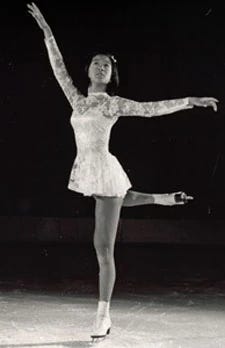
Wang spent her childhood becoming an Olympic figure skater. She was serious about it, training through summers in Denver, competing at the national level, appearing in Sports Illustrated’s Faces in the Crowd in 1968. The plan was the Olympics. She and her partner James Stuart competed at the 1968 U.S. Figure Skating Championships and failed to qualify. She was devastated. She had a breakdown and went to Paris.
In Paris, something else woke up.
She discovered fashion not as a consolation prize, but as the thing that pulled her attention the way skating once had, the thing that made her feel, as she later said, that she had a reason to get up in the morning.
She entered Vogue at twenty-three, becoming one of the youngest editors in the magazine’s history. She stayed seventeen years. Then she was passed over for editor in chief the position she had built her entire Vogue career toward and lost it to Anna Wintour.

Devastated again. But this time she looked harder at herself.
At forty, having failed to reach the top of two fields she had dedicated years to, Wang started a bridal company because she couldn’t find a wedding dress she liked for her own wedding Not for some grand vision or a strategic pivot but a personal problem she decided to solve.
That company became Vera Wang.
Robert Greene’s point in this chapter is that the world produces a thousand kinds of people, with a thousand distinct sets of fascination and capacity, and that the tragedy is not failure but the misapplication of a person to a field they were never built for, no matter how hard they worked, no matter how long they stayed. Wang was a gifted skater. She was a capable editor. But neither field was where her particular nature could fully express itself. The bridal gown, the figure skating costume, the intersection of structure and beauty and movement that was the flower that was always trying to bloom. It took two major failures to clear enough ground for it to grow.
The world would have filed Wang under “failed Olympic skater” and “passed-over Vogue editor.” What it got instead was someone who could only have arrived at her actual work by walking through exactly those two doors and finding them closed.
HOW TO IMPLEMENT
Go back before you go forward. Before you set another goal or build another plan, go back to what pulled your attention before anyone told you what was valuable before you learned to want what you were supposed to want. That period, before socialization narrowed your field of vision, is the clearest record of your original nature you will ever have. The thread you find there, however thin or impractical it seems, is the one worth following.
Distinguish between what fascinates you and what impresses others. These are almost never the same thing, and the confusion between them is where most people lose decades pursuing what earns admiration rather than what generates in them the kind of deep, involuntary engagement that Robert Greene says is the only reliable signal you are moving toward your nature rather than away from it.
Treat your failures as navigational data, not verdicts. Wang didn’t fail at skating and fashion, she was being redirected toward the work she was actually built for, though she couldn’t see it from inside the failure. Robert Greene says this is how the Life’s Task often reveals itself not through a clear vision of the destination but through the gradual elimination of everything that doesn’t fit, until what remains is the one thing that could only have been yours.
Begin moving toward it now, even partially. Robert Greene is not counseling recklessness, he is counseling direction, the gradual reorientation of your time and energy toward the work that is genuinely yours, even if that reorientation takes years and even if it begins in the margins of a life not yet fully your own.
THE TRUTH
The pressure to be like everyone else is not malicious, it is simply the natural tendency of any social system to produce people it already knows how to use, and the tragedy is not that the system is cruel but that most people collaborate with it willingly, trading the difficult work of becoming themselves for the easier comfort of fitting in, and discovering only much later, if they discover it at all, that the life they built to satisfy everyone else’s expectations was never going to satisfy the deeper need that was there from the beginning.
Robert Greene’s argument is that equality was never meant to produce sameness, it was meant to produce the conditions under which every person could become fully what they are, and that a world in which a thousand different flowers bloom is not a chaotic world but a richer one, because each flower is doing the one thing no other flower can do, which is be entirely and completely itself.
The question is whether you will spend your life becoming what the world decided it needs from you, or whether you will do the harder and more important work of discovering what you actually are and then refusing to be anything else.
A question for you:
If you strip away everything you were told to want be it the career, the title, the version of success you inherited from someone else what is the thing that was always there, pulling at you, that you have never fully allowed yourself to follow?